Discover The Ring Road
Quick Guide to Iceland's Ring Road
- The Ring Road (Route 1) circles Iceland, covering 1,332 km, passing waterfalls, glaciers, black sand beaches, and charming villages - it's the ultimate Icelandic road trip.
- Plan 7-10 days minimum to experience highlights without rushing. Summer offers midnight sun and easier driving, whilst winter brings northern lights and challenging conditions.
- Essential driving prep: expect single-lane bridges, blind rises, wandering sheep, and rapid weather changes. Always check road.is conditions before your departure.
- GO Iceland provides reliable car rentals with winter tires, clear pricing, and KEF airport pick-up to make your Ring Road adventure smooth and memorable.
When planning a trip to Iceland, you will frequently hear and see mentions of 'The Ring Road'. But what is it? Iceland's Ring Road (Route 1) is the country's main highway, forming a complete 1,332 km circuit around the island. The road connects all of Iceland's regions except for the Westfjords and Snæfellsnes Peninsula, providing access to the nation's most spectacular natural attractions.
The Ring Road has a few names, like Route 1, Highway 1, or Road No. 1. The Icelanders call it Hringvegurinn, which literally means the Ring Road. It's also locally called Þjóðvegurinn, the national road.
Why Choose Go Iceland for Your Ring Road Journey?
At GO Iceland, we understand that your Ring Road adventure deserves reliable wheels and exceptional service. Here's what sets us apart:
- KEF Airport Pick-Up: Collect your vehicle directly from Keflavík International Airport with no hassle, no hidden fees, and no shuttle buses to remote lots.
- Winter-Ready Fleet: All our vehicles come equipped with winter tires as standard, ensuring safe driving regardless of when you visit.
- Transparent Pricing: Clear, upfront costs with no surprise charges. What you see is what you pay.
- Experienced Local Team: Our Iceland-based staff know the Ring Road inside out and provide personalised route recommendations.
- 24/7 Roadside Assistance: Should anything unexpected occur, our support team is available around the clock.
- Flexible Rental Periods: Whether you need 5 days or 2 weeks, we offer competitive rates for all journey lengths.
- Modern, Well-Maintained Vehicles: Our fleet is regularly serviced and includes 4x4 options for those venturing onto F-Roads or visiting during winter.
How Long Does it Take to Drive the Ring Road?
The Ring Road is approximately 1,332 km (828 miles) and, in theory, could be driven in 20 hours. This is a surprisingly short time considering you're driving around the whole country! However, this would not be doing Iceland justice.
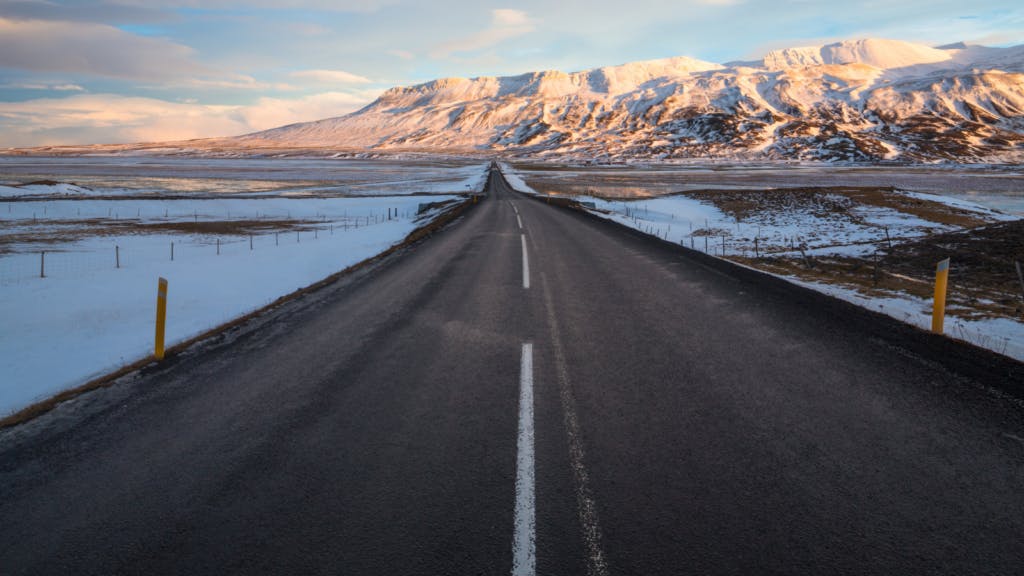
We recommend allowing a minimum of 7-10 days to experience the Ring Road properly, giving you time to explore attractions, adjust for weather, and avoid driver fatigue. Most travelers find 10-14 days ideal — and traveling in a large rental car makes the long drives far more comfortable for groups or families.
There are countless must-see attractions around the country that the Ring Road encompasses, which is the main benefit of the road.
Recommended Trip Durations
- 5-6 Days: Express route hitting major highlights only. Expect 4-6 hours of driving daily. Best for those with limited time.
- 7-9 Days: Balanced pace with time for key attractions and some flexibility. 3-5 hours driving per day. Most popular choice.
- 10-14 Days: Leisurely exploration allowing detours, longer hikes, and weather contingencies. 2-4 hours driving daily. Highly recommended.
- 14+ Days: Comprehensive journey including Westfjords, Snæfellsnes Peninsula, and Highland detours. The ultimate Iceland experience.
Which Way Should I Drive Around the Ring Road?
The biggest question when driving the Ring Road is: Should one drive it clockwise or anti-clockwise? There is no right or wrong answer here. It all depends on what you want to see the most and how you want to experience it.
Most visitors drive anti-clockwise (heading east from Reykjavík) as this allows you to tackle popular South Coast attractions first when you're fresh, gradually moving to quieter regions.
Another factor to consider before making your decision is the weather. Get the latest forecast and base your route on that. If there is rain on the south side of the country, head north, and vice versa. If the whole of Iceland is sunny, toss a coin!
When Should I Drive the Ring Road?
The biggest influencing factors on when to experience your Ring Road adventure are how many attractions you want to see in a day and what you want to experience.
Daylight hours are much more plentiful in the summer months, with the added wonder of the Midnight Sun. In winter, the sun sets much earlier in the afternoon, making driving on the open road a little less enjoyable. That is not to say that driving in Iceland's winter is impossible - it brings its own advantages, such as the chance to spot the Northern Lights on your travels!
Read more: A beginner’s guide to Iceland
Seasonal Considerations
Summer (May-September):
- Pros: 18-24 hours of daylight, warmer temperatures (10-15°C), all roads open, easier driving conditions, abundant wildlife
- Cons: Higher accommodation prices, busier attractions, potential for midges in some areas, less chance of Northern Lights
- Best for: First-time visitors, families, photographers seeking lush landscapes
- A medium rental car is well-suited to summer Ring Road conditions when a 4x4 isn't necessary.
Winter (October-April):
- Pros: Northern Lights viewing, ice cave access, fewer tourists, dramatic winter landscapes, lower prices
- Cons: 4-6 hours of daylight, icy roads, potential closures, challenging driving, colder temperatures (-5 to 5°C)
- Best for: Northern Lights seekers, experienced winter drivers, budget travelers, ice cave enthusiasts
Practical Tips for Driving the Ring Road
Here are some things you need to know when driving Iceland’s Ring Road.
Single-Lane Bridges
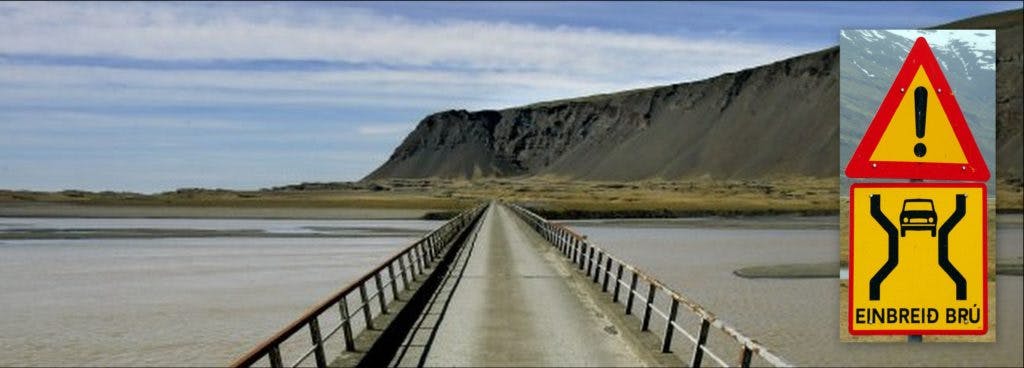
Roads in Iceland are usually narrower than visitors expect, with very few hard shoulders to speak of. This means that careful driving is absolutely essential, and our speed limits are famously low (and strict). What’s more, an oddity of our main roads is single-lane bridges, with no signs to indicate priority. The priority typically goes to the vehicle closest to the bridge. Cross these carefully and slowly to prevent accidents.
Well before the bridge entrance, you will have enough space to stop on your right-hand side to give way to the oncoming traffic to pass you safely. When you have stopped securely on your right-hand side, you may even blink with your headlights to show the car on the other side that it’s safe to pass the bridge. Many accidents happen at single-lane bridges when people blindly drive over them without considering possible oncoming traffic.
Single-Lane Tunnels
There are not many single-lane tunnels along the Ring road, but you will find them in the East and the Westfjords. Before entering a single-lane tunnel, there will be clear signs. The sign will indicate who has the right of way, with shoulders at regular intervals to allow the priority direction to pass. If the arrow on the right side is white, the oncoming traffic has to yield to you. But as always, drive with caution and be aware of oncoming traffic.
Blind Rises
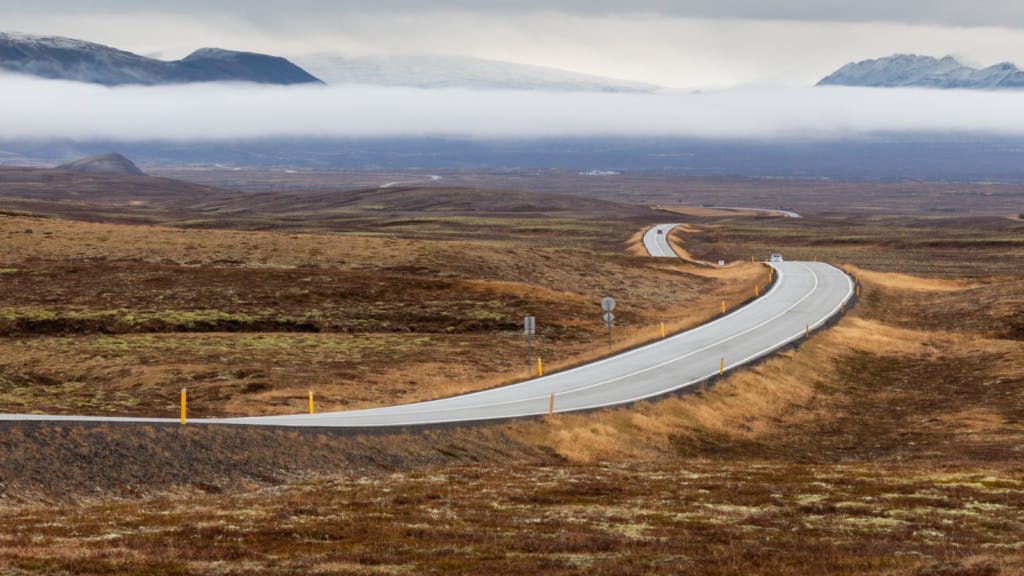
Another road feature that is quite common in Iceland is a blind rise, or Blindhæð as the Icelanders say. They are more common on smaller roads than on the Ring Road. A blind rise is a slight hill that restricts your visibility ahead, meaning you will not see if there is oncoming traffic on the other side of the hill. These require you to slow down to make sure you can react to anything on the other side of the rise.
At times a blind rise will be divided with a traffic sign to separate the two lanes. As always, drive carefully and make sure you are not driving faster than the road, visibility, or your experience allows.
Be Careful of Mountain Passes
When driving the Ring Road off-season, one has to prepare for delays in the form of mountain passes. These might be icy or even snowed in if the weather turns. It’s important to always be on top of the weather in Iceland, especially in the winter months when it can change so fast, as mountain roads can become impassable within an hour. If it is snowing while on your Iceland trip, it’s a good idea to let the hotel know where you are heading, what route you are taking, and when you are expecting to arrive at your new destination. As usual, drive with care and you will not have any problems at all.
Read more: Learn more about driving in Iceland
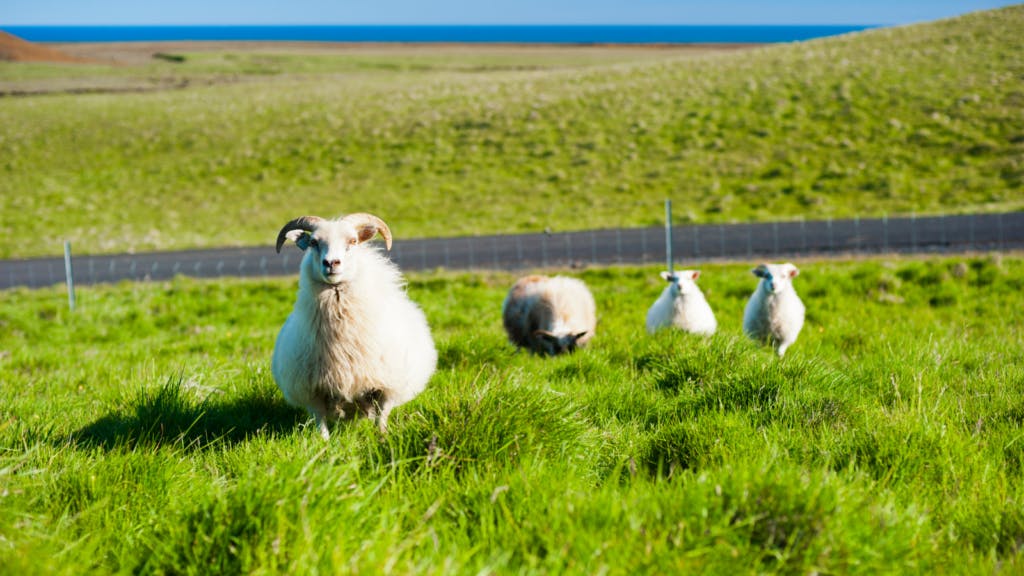
Beware of Sheep and Horses
Icelandic sheep roam around the country freely during the summer. You will find them grazing just about anywhere or licking salt off the roads. Sheep are unpredictable animals and are not the sharpest tools in the shed. When you see sheep along or on the road, slow down. Don't expect them to just run away from you. They can come out of nowhere, so be prepared to hit the brakes if that is the case. If you do collide with a sheep, you are responsible and might be forced to pay for the loss to the owner. Find out more about driving in Iceland in summer.
Iceland's horses don't enjoy the same freedom as its sheep, but they can pose a problem on the road. Horse owners and riders sometimes travel in large groups, but it's rare to see them on the Ring Road. If this does happen, show the horses respect and slow down, almost to a halt, when you pass them. They easily scare and might cause injury to themselves, the riders, and even your Iceland rental car.
Never Stop on the Road
One type of behaviour that has increased tremendously is tourists (and Icelanders at times) stopping in the middle of the road. Stopping on the road can put so many others in danger, and in fact, in 2016, we had a fatal accident due to a driver stopping 'in the middle of the road'. Please choose your stops wisely and consider other drivers.
Turnpikes or Toll Roads
There are few tolls in Iceland, with ferry rides and Hvalfjarðargönginn, the big tunnel just north of Reykjavík, being the only exceptions. The tunnel is part of the Ring Road, but by driving around the fjord Hvalfjörður, you can skip the tunnel. Either route is a good choice. The tunnel is an engineering marvel, and the ride around the fjord is stunning.
Speed Cameras
Expect speed cameras all around the country. Typically, there are signs displayed to make you aware that you are about to pass one. However, you won't see any signs when the police are out measuring speed. Fines for speeding are notoriously high, so taking into account the new driving conditions, sheep, single-lane bridges, etc, it is much more prudent and far safer to stick to the speed limits to avoid any fines.
Additional Essential Tips
- Check road.is daily: Iceland's official road condition website provides real-time updates on closures, ice, and hazards.
- Fill up whenever possible: Petrol stations can be 100+ km apart in remote areas. Never let your tank drop below half in East Iceland or North Iceland.
- Download offline maps: Mobile signal is patchy on the Ring Road. Ensure your navigation works offline.
- Headlights always on: Icelandic law requires headlights 24/7, even in summer daylight.
- Emergency number is 112: Save this in your phone. It works even without a mobile signal.
- Respect parking areas: Only park in designated spots. Stopping on the Ring Road itself is illegal and dangerous.
Must-See Stops Along the Ring Road
The Ring Road connects Iceland's most spectacular attractions. Here are the absolute highlights you shouldn't miss:
South Coast Highlights
- Seljalandsfoss & Skógafoss waterfalls: Two of Iceland's most photographed cascades, both easily accessible from the Ring Road
- Reynisfjara Black Sand Beach: Dramatic basalt columns and powerful Atlantic waves (stay safe, sneaker waves are dangerous)
- Dyrhólaey: Towering sea arch and puffin colony (summer only)
- Jökulsárlón Glacier Lagoon: Floating icebergs and seal spotting opportunities
- Diamond Beach: Icebergs scattered on black sand - a photographer's paradise
East Iceland Highlights
- Vestrahorn Mountain: Dramatic peaks rising from black sand (small access fee)
- Egilsstaðir: Largest town in the east, ideal for restocking supplies
- Seyðisfjörður: Colourful wooden houses and artistic community
- Coastal fjord drives: Winding roads with stunning views (allow extra time)
North Iceland Highlights
- Lake Mývatn: Geothermal area with lava formations, mud pots, and craters
- Goðafoss Waterfall: The 'Waterfall of the Gods', directly beside the Ring Road
- Akureyri: Iceland's second city, a charming harbour town with excellent restaurants
- Dettifoss: Europe's most powerful waterfall (requires a 2km hike on a gravel road)
- Húsavík: Whale watching capital of Iceland
West Iceland Highlights
- Hraunfossar & Barnafoss: Side-by-side waterfalls with contrasting characters
- Grábrók Crater: Easy hike with 360-degree views
- Snæfellsnes Peninsula (detour): Kirkjufell Mountain, Arnarstapi coastal cliffs, Snæfellsjökull Glacier
Frequently Asked Questions About the Ring Road
How much does it cost to drive the Ring Road?
For a 7-day Ring Road trip, budget approximately $1,200-2,500 per person, depending on your travel style. This includes car rental ($400-800), fuel ($250-350 for the full circuit), accommodation ($500-1,000), and food ($250-400). Camping dramatically reduces costs, while luxury hotels increase them. GO Iceland's transparent pricing ensures your car rental costs are clear from the start with no hidden fees.
Do I need a 4x4 to drive the Ring Road?
In summer (May-September), a 2WD vehicle is sufficient for the Ring Road as it's entirely paved. However, from October to April, we strongly recommend a 4x4 for safer handling in snow and ice. If you plan to explore F-Roads or Highland routes at any time of year, a 4x4 is mandatory and legally required. GO Iceland offers both 2WD and 4x4 options to suit your travel season and plans.
Can you wild camp along the Ring Road?
Wild camping in Iceland is restricted. You must use designated campsites, which are plentiful along the Ring Road. Expect to pay $10-20 per person per night. Facilities vary from basic (toilet and cold water) to full-service (hot showers, kitchens, laundry). Campers with vehicles over 3.5 tonnes must use official campsites. Wild camping is illegal near populated areas and can result in substantial fines.
What is the speed limit on the Ring Road?
The speed limit on the paved Ring Road is 90 km/h (56 mph), though many sections have lower limits (70-80 km/h) due to bends, settlements, or hazards. In built-up areas, expect 50 km/h (31 mph). Speed cameras are common, and fines are expensive (starting at $195 for minor infractions). Drive to conditions, not limits - ice, rain, and gravel sections require slower speeds regardless of posted limits.
Are there petrol stations along the Ring Road?
Yes, but distances vary greatly. In South Iceland, stations appear every 50-80 km. East and North Iceland can stretch to 100+ km between stations. The longest gap is approximately 150 km in the highlands. Most gas stations in Iceland are automated, accepting credit cards 24/7. N1, Orkan, and Olís are the main brands. Always refuel when below half-tank in remote areas. Expect to pay $2.20-2.60 per litre.
Is the Ring Road safe to drive in winter?
The Ring Road remains open in winter but requires preparation and caution. Expect ice, snow, reduced visibility, and potential closures during storms. Essential precautions include: renting a 4x4, checking road.is daily, allowing flexible schedules for weather delays, never driving in blizzards, and informing accommodation of your expected arrival. Winter tires are mandatory and included with all GO Iceland rentals. Many travellers find winter driving rewarding for Northern Lights and ice caves, but it's not recommended for inexperienced winter drivers.
Can I see the Northern Lights from the Ring Road?
Yes, the Ring Road offers excellent Northern Lights viewing from September-March, particularly in remote sections of North and East Iceland where light pollution is minimal. Best viewing conditions require clear skies, darkness (away from towns), and solar activity. Check the Icelandic Met Office aurora forecast (vedur.is). Pull into designated parking areas - never stop on the roadside. The Northern Lights are a natural phenomenon, and sightings are never guaranteed, even in winter.
Start Your Ring Road Adventure with GO Iceland
Ready to experience Iceland's most scenic drive? GO Iceland makes your Ring Road journey effortless with reliable vehicles, winter-ready tires, and KEF airport pick-up. Our local team knows every twist of Route 1 and provides the support you need for a stress-free adventure.
Browse our fleet of well-maintained rental cars and 4x4s, all available with transparent pricing and flexible rental periods. Whether you're chasing waterfalls in summer or northern lights in winter, we'll get you on the road with confidence. Book your GO Iceland rental car today

More in Road Trip Itineraries
 Road Trip Itineraries
January 29, 2025
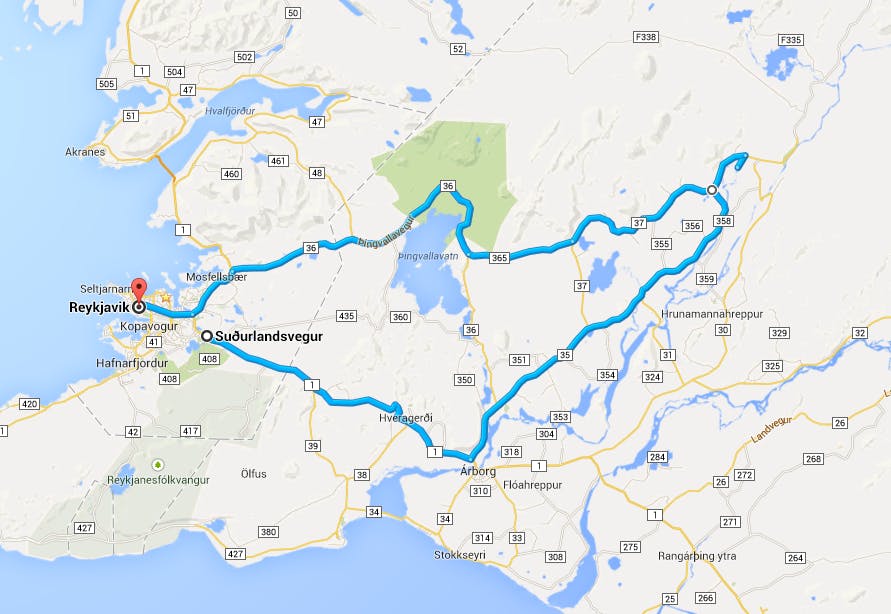
Driving The Golden CircleWant to drive the Golden Circle by yourself? Here is everything you need to know about driving this...
 Road Trip Itineraries
January 29, 2025
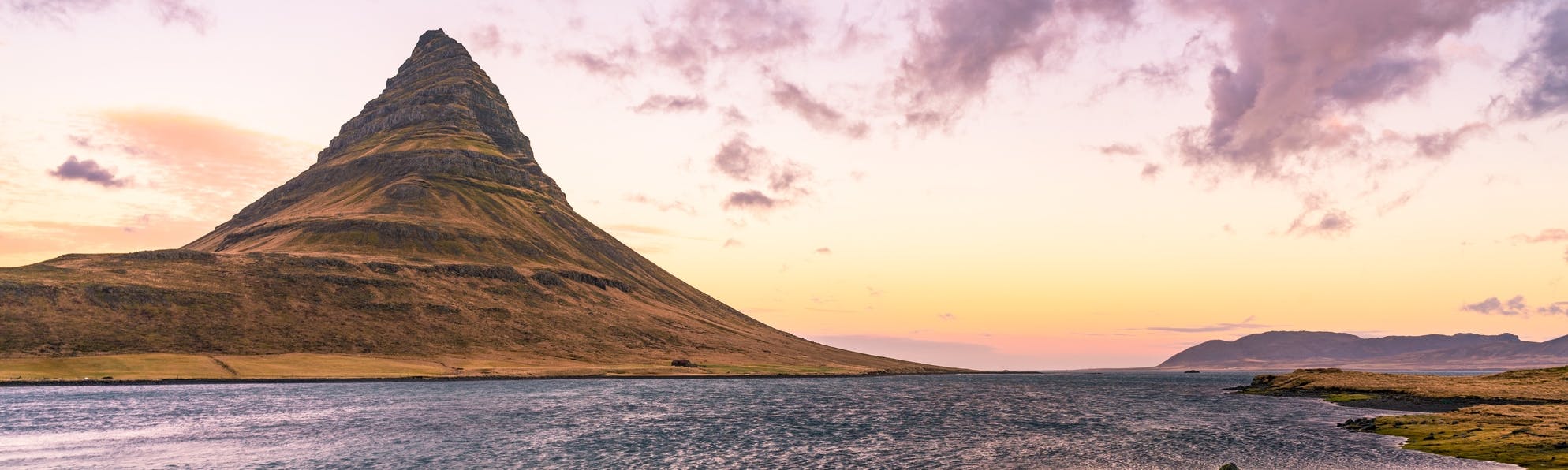
Roadtrip around IcelandIceland is an exciting holiday destination year round, not just summer. Find out why hundreds of people visit...
 Road Trip Itineraries
January 29, 2025
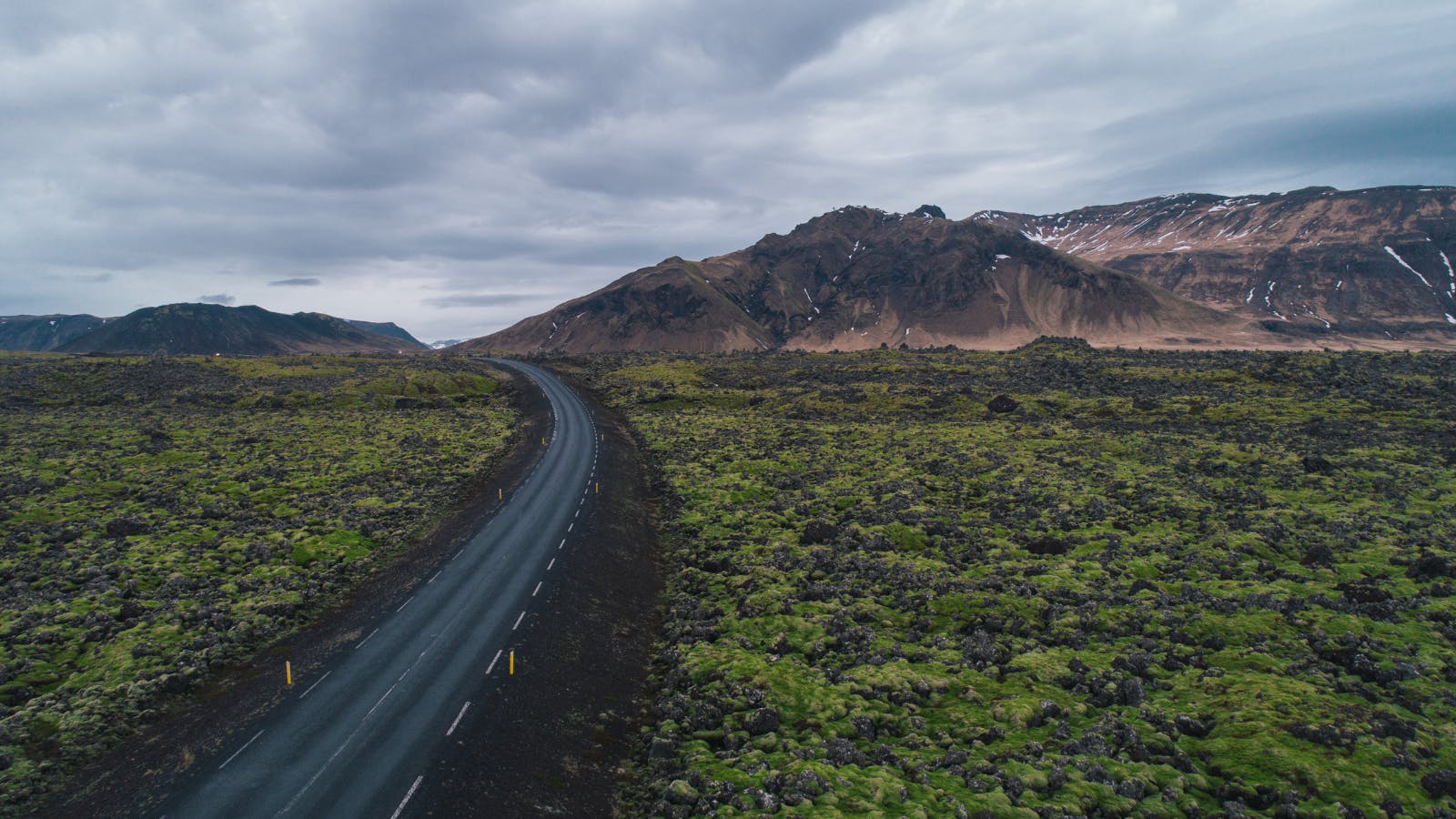
5 Best Road Trips in IcelandLooking to plan your summer road trip in Iceland? Here are some of the best driving routes on...